
Technical ReadinessDownload this guide
Human interpretation vs AI interpretation: how to choose
Human interpreters remain the safer choice for official, sensitive, interactive, executive, legal, technical, or public-facing meetings. Technology-assisted options can fit selected lower-risk or recurring use cases.
On this page


Checklist
- Use human interpreters for official, sensitive, or high-stakes meetings.
- Consider captions or transcripts as support for accessibility or records.
- Consider AI-assisted options only where risk, context, and audience expectations allow it.
- Document the chosen model so organizers, speakers, and participants know what to expect.
Common risks
- Treating AI as equivalent to professional interpreters for official meetings.
- Using automation where nuance, confidentiality, or participant interaction matters.
- Not telling participants what language-access model is being used.
- Failing to provide a backup for critical sessions.
What America Interpretation can handle
- Human-first risk guidance.
- Recommendation between interpretation, captions, transcripts, and Canoë.
- Scoping for controlled technology-assisted use cases.
What organizers should prepare
- Clarify meeting stakes and audience expectations.
- Confirm privacy, confidentiality, and procurement constraints.
- Decide whether the output is for participation, accessibility, or records.
Related guides
How to prepare speakers for interpretation
A practical speaker-preparation checklist for bilingual and multilingual meetings with simultaneous interpretation.
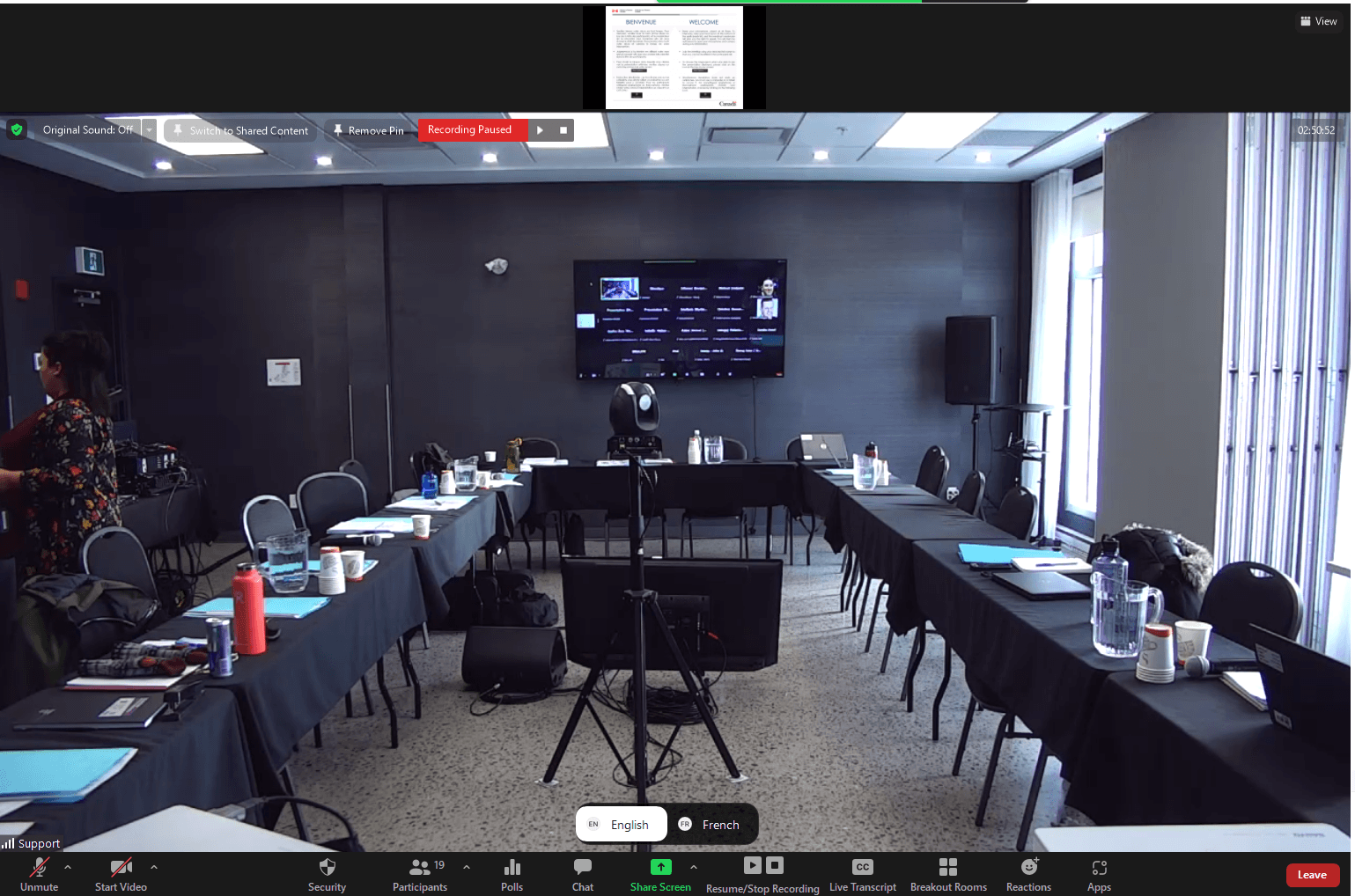
Zoom interpretation checklist
Checklist for Zoom meetings with simultaneous interpretation, language channels, sound checks, and remote speakers.
Microsoft Teams interpretation checklist
Planning checklist for interpreted Microsoft Teams meetings and events with remote or hybrid participants.
Want to validate your setup?
Share the format, languages, platform, venue, and technical context. We can help identify risks before the meeting.
Request a Quote