
Technology Options
Human-first interpretation with controlled technology options
Use human interpreters for official, sensitive, executive, and high-stakes meetings. Use automation only where the context supports it.
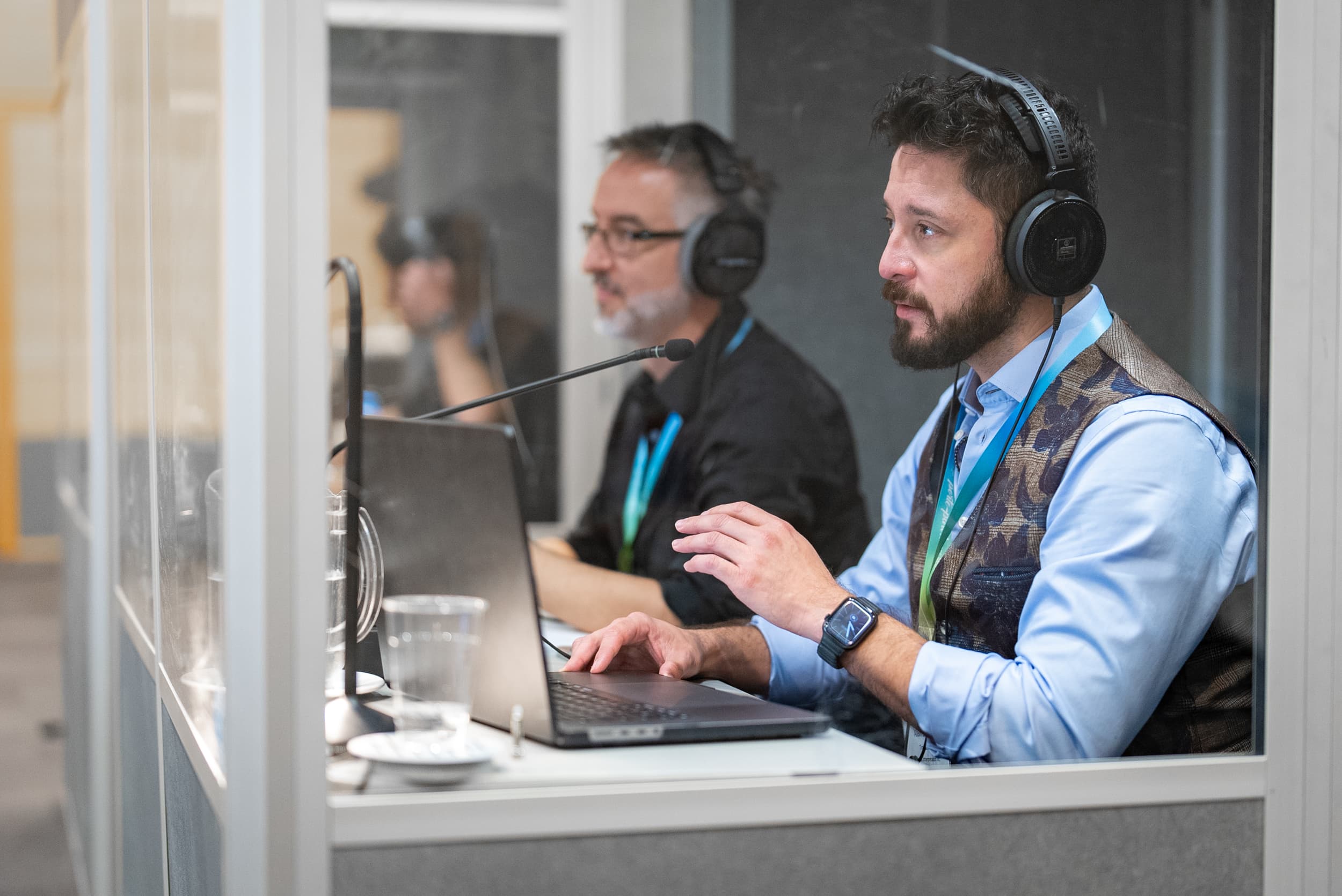
Human interpretation
Best for
Official-languages obligations, sensitive meetings, executive sessions, public-sector mandates, legal or technical content, and mission-critical events.
Lead recommendation for high-stakes work.
AI-assisted interpretation via Canoë
Best for
Selected lower-risk sessions, broader language access, recurring internal contexts, or exploratory multilingual support.
Linked as a separate technology offer, not the core institutional service.
Captions and transcripts
Best for
Accessibility support, post-event records, searchable content, or lower-risk comprehension aids.
Useful as support, but not a substitute for voiced simultaneous interpretation when participation depends on it.
Canoë supports selected technology-assisted language-access needs
Canoë can be explored as an AI interpretation option without weakening America Interpretation’s human-services brand.
Use cases
Lower-risk, recurring, or exploratory sessions.
Human frame
Official and high-stakes meetings stay oriented around human interpreters.
Separate product
Canoë remains connected, but distinct from the core institutional service.
Meeting setup question
No one available? Send a setup question.
Use this fallback for one practical question about format, microphones, platform, documents, or interpreter setup. We will route it through the same intake process.
Not sure which option fits?
Tell us the stakes, audience, languages, and format. We will recommend human interpretation, technology support, or a controlled blend.
Request a QuoteOfficial or sensitive
Human interpretation is the recommended model.
Accessibility or records
Captions and transcription can support the service.
Recurring and lower risk
Assisted options can be evaluated against context, privacy, and audience.